
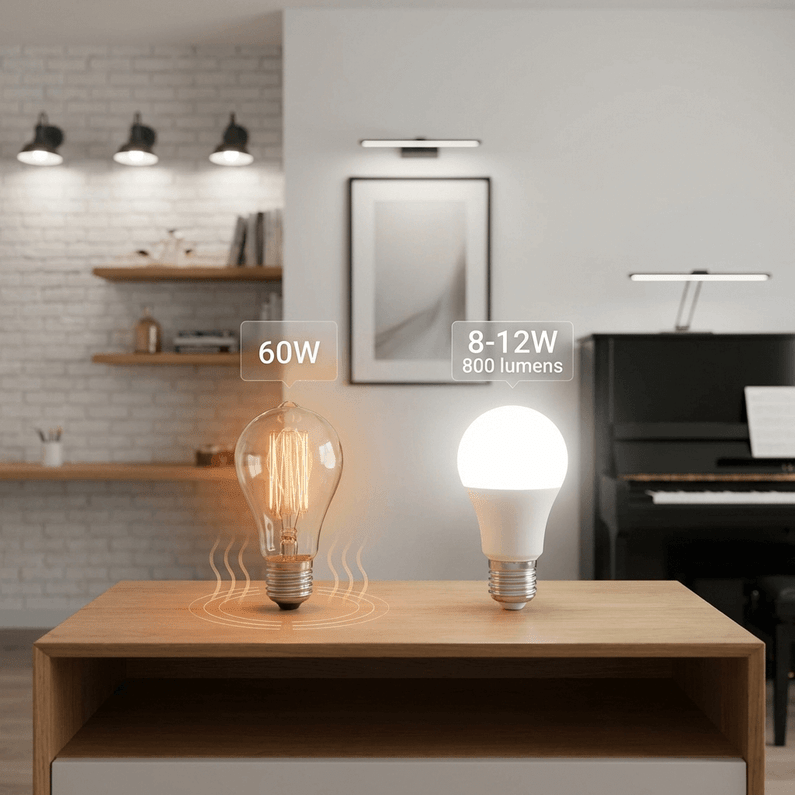
Understanding Lumens vs. Watts: What Your LED Light Really Means
Choosing a new light bulb used to be simple. You would walk into a store, look for a 60-watt bulb, and know exactly what you were getting. However, with the shift from traditional incandescent bulbs to highly efficient LEDs, that old way of thinking no longer works. The term "watts" doesn't tell the whole story about a modern light's performance.
If you’ve found yourself confused by the packaging on new LED bulbs, you're not alone. The key to making the right choice lies in understanding a different unit of measurement: lumens. This guide will clarify the difference between lumens and watts, explain why lumens are the new standard for brightness, and help you choose the perfect LED light for any space.
What Are Watts? A Measure of Energy Use
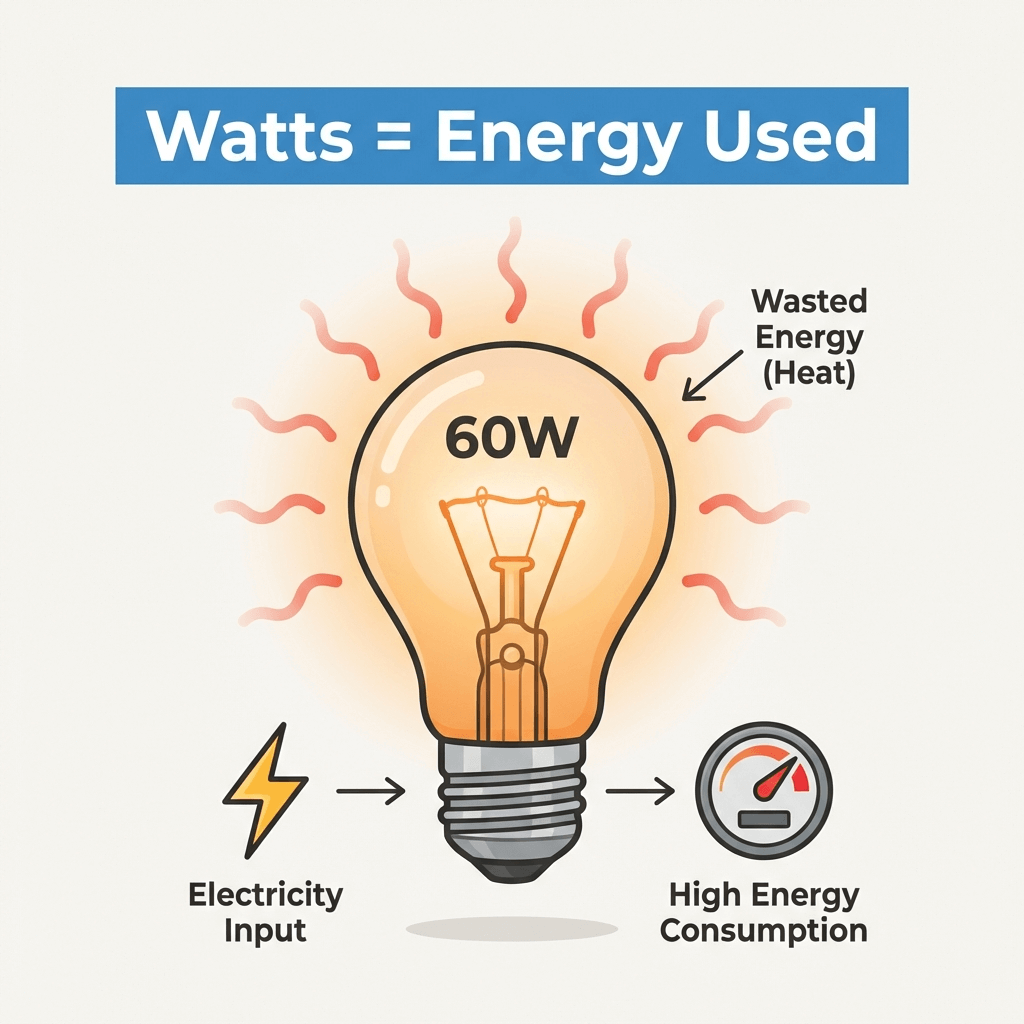
For decades, we associated watts with the brightness of a light bulb. A 100-watt bulb was for a large room, while a 40-watt bulb was perfect for a small lamp. But watts are not, and have never been, a measure of brightness.
Watts (W) measure the amount of energy a device consumes. When you paid your electricity bill, you were paying for the watts your incandescent bulbs used to produce light. The problem was that these older bulbs were incredibly inefficient. A significant portion of the energy they consumed was wasted as heat, not converted into visible light. For example, a traditional 60-watt incandescent bulb loses about 90% of its energy as heat.
What Are Lumens? The True Measure of Brightness
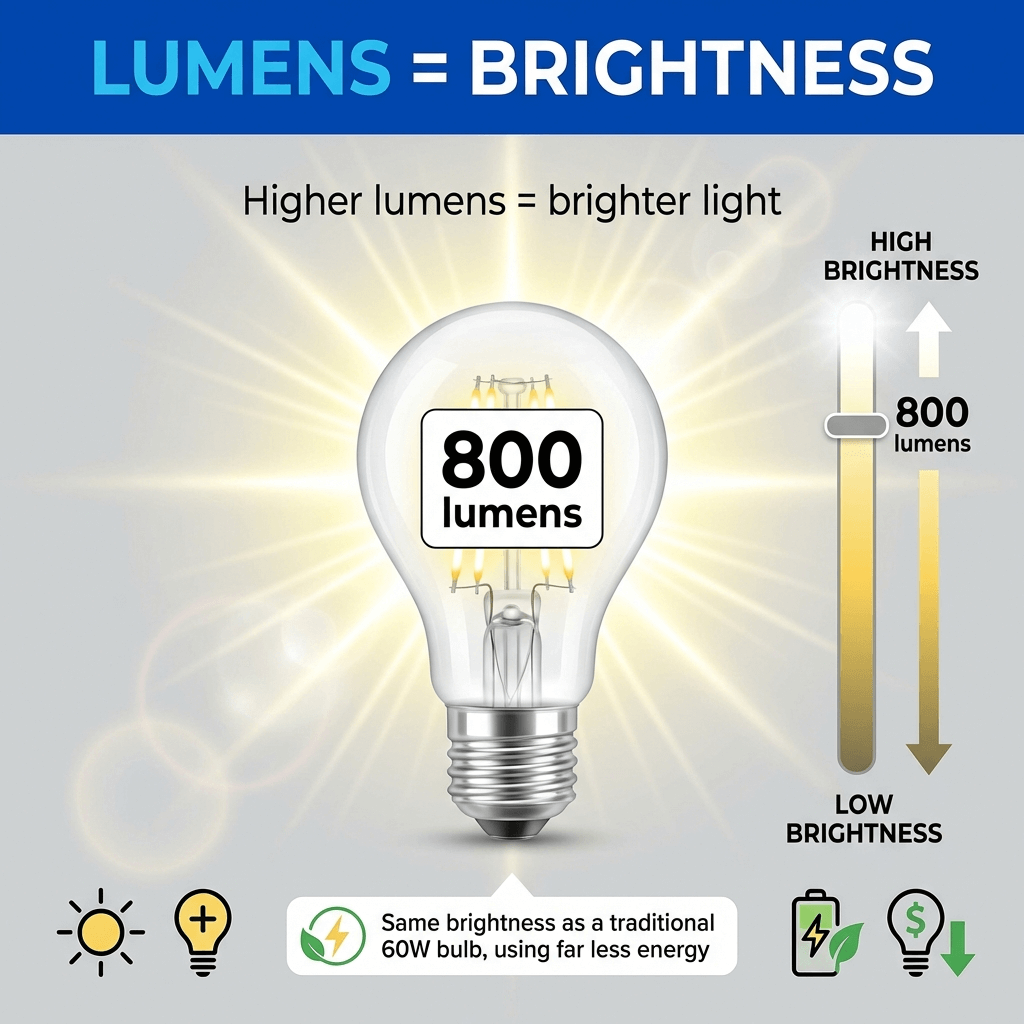
This is where lumens come in. Lumens (lm) are the standard unit of measurement for luminous flux, which is the total amount of visible light produced by a source. Simply put, lumens measure brightness. The higher the lumen count, the brighter the light will be.
Unlike watts, which only tell you how much power a bulb draws, lumens give you a direct, accurate measure of its light output. This distinction is crucial with the rise of energy-efficient technologies like LEDs. LEDs are designed to produce more light using far less energy, making the watt measurement almost irrelevant for determining brightness.
The Shift: Why Lumens Matter More Than Watts for LEDs
Imagine you need to replace an old 60-watt incandescent bulb. If you were to buy a 60-watt LED bulb, you would be temporarily blinded. An LED that consumes 60 watts of energy produces an astonishing amount of light—far more than you would need for a typical living room lamp.
This is the core of the lumens vs. watts discussion. An LED can produce the same amount of light (lumens) as a 60-watt incandescent bulb while using only a fraction of the energy (watts).
A Practical Comparison
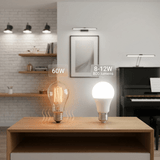
Let’s look at a common example to make this clear. A traditional 60-watt incandescent bulb produces approximately 800 lumens. To get that same level of brightness from a more modern bulb, you would need:
- An LED bulb that uses only about 8 to 12 watts.
- A Halogen bulb that uses around 43 watts.
- A Compact Fluorescent (CFL) bulb that uses about 13 to 15 watts.
As you can see, the wattage varies dramatically, but the lumen output (800 lm) remains the same. This is why focusing on watts is misleading. By choosing an 8-watt LED that produces 800 lumens, you get the same brightness as a 60-watt incandescent bulb while using nearly 85% less energy. This translates directly to savings on your electricity bill.
Practical Tips for Choosing the Right LED Bulb
Now that you understand the difference, how do you apply this knowledge? Shopping for LEDs is easy when you focus on lumens. Federal Trade Commission (FTC) regulations require manufacturers to print a "Lighting Facts" label on bulb packaging, making it simple to find the information you need.
1. Think in Lumens, Not Watts
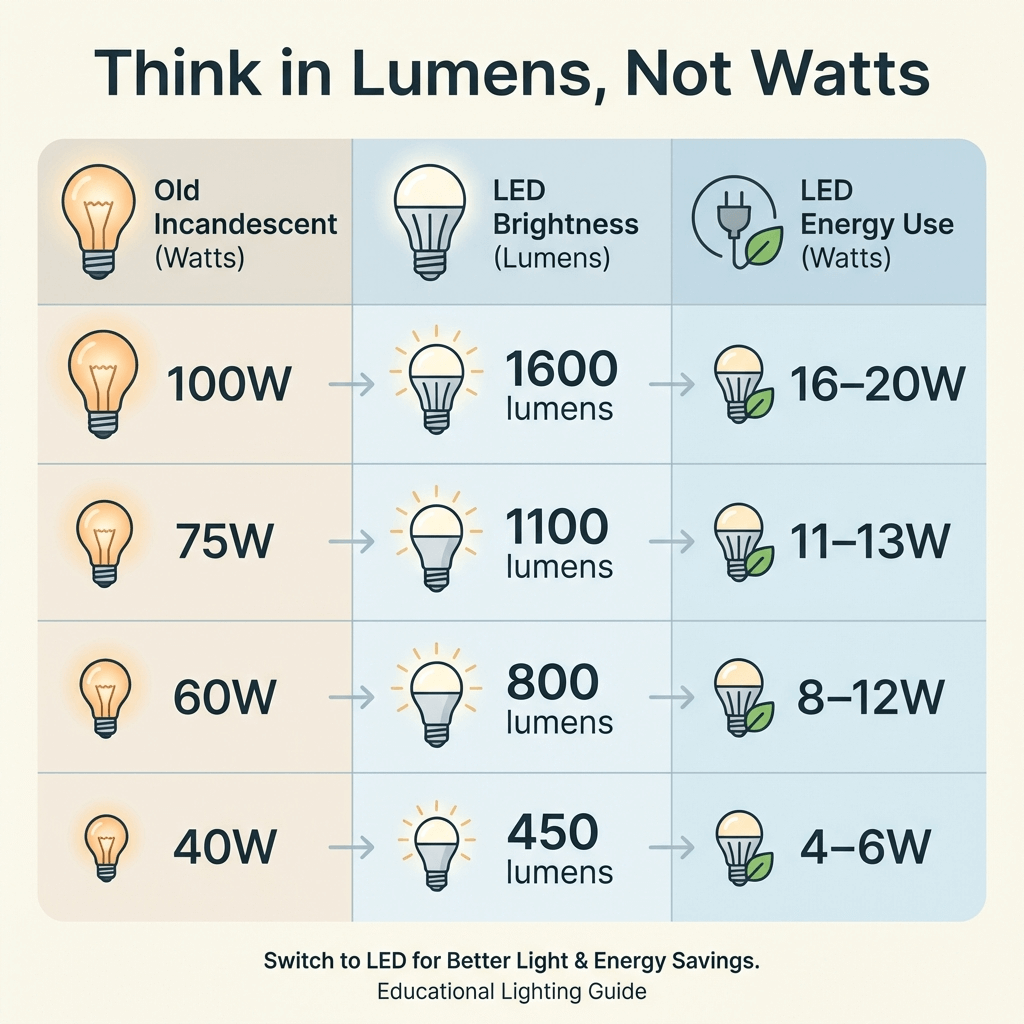
The first step is to change your mindset. Instead of asking "What wattage do I need?", ask "How many lumens do I need?". Use this quick conversion chart as a general guide to replace your old incandescent bulbs:
2. Consider the Space and Purpose
The right brightness depends entirely on where and how you will use the light.
- Task Lighting (Kitchens, Offices, Bathrooms): These areas require bright, focused light. Aim for higher lumen counts, typically in the range of 800-1600 lumens or more per fixture, depending on the size of the room. Under-cabinet lighting might need 150-250 lumens per foot.
- Ambient Lighting (Living Rooms, Bedrooms): This is the general, overall lighting of a room. A range of 400-800 lumens per bulb is often sufficient for creating a comfortable, well-lit atmosphere.
- Accent Lighting (Hallways, Bookshelves): Used to highlight specific features, accent lighting doesn’t need to be overly bright. Bulbs providing 150-450 lumens are usually adequate.
3. Check the Lighting Facts Label
The Lighting Facts label is your best friend when buying new bulbs. It provides a clear, standardized breakdown of a bulb’s performance. Key metrics on the label include:
- Brightness: Measured in lumens (lm). This should be the first thing you look for.
- Estimated Yearly Energy Cost: Based on average use, this helps you understand the long-term savings.
- Life: How long the bulb is expected to last, usually in years.
- Light Appearance: Measured on a Kelvin (K) scale, this tells you if the light is warm (yellowish) or cool (bluish). A lower Kelvin value (2700K) is warm and cozy, while a higher value (5000K) is cool and crisp, similar to daylight.
- Energy Used: Measured in watts (W). Use this to confirm the bulb’s efficiency.
Embrace the Power of Lumens
Understanding the relationship between lumens and watts is essential for making smart lighting choices in the modern world. While watts tell you how much energy a bulb will cost you, lumens tell you how much light you will actually get. By prioritizing lumens, you can ensure you get the brightness you need while taking full advantage of the energy efficiency and cost savings offered by LED technology.
The next time you’re shopping for a light bulb, ignore the wattage and look straight for the lumen count. You’ll be able to light your home more effectively, reduce your carbon footprint, and lower your energy bills—all by making a simple switch in how you think about light.
At Cocoweb, we offer a range of LED barn lights, picture lights, and piano lights designed for energy-efficient, high-quality illumination throughout your home or workspace. Explore our selection to find the perfect lighting solution for your needs.
Recent Posts
-

Pantone’s 2026 Color of the Year: Lofty White
Introducing Lofty White: Pantone Color of the Year 2026 The design world has its new north star: Lof …23rd Feb 2026 -
Understanding Lumens vs. Watts: What Your LED Light Really Means
Choosing a new light bulb used to be simple. You would walk into a store, look for a 60-watt bulb, a …29th Jan 2026 -

How to Light Large Paintings Without Overpowering Your Room
You’ve found the perfect large-scale artwork. It’s bold, it’s beautiful, and it demands attention. B …20th Jan 2026