
6 Bathroom Lighting Setups for a Brighter Morning Routine
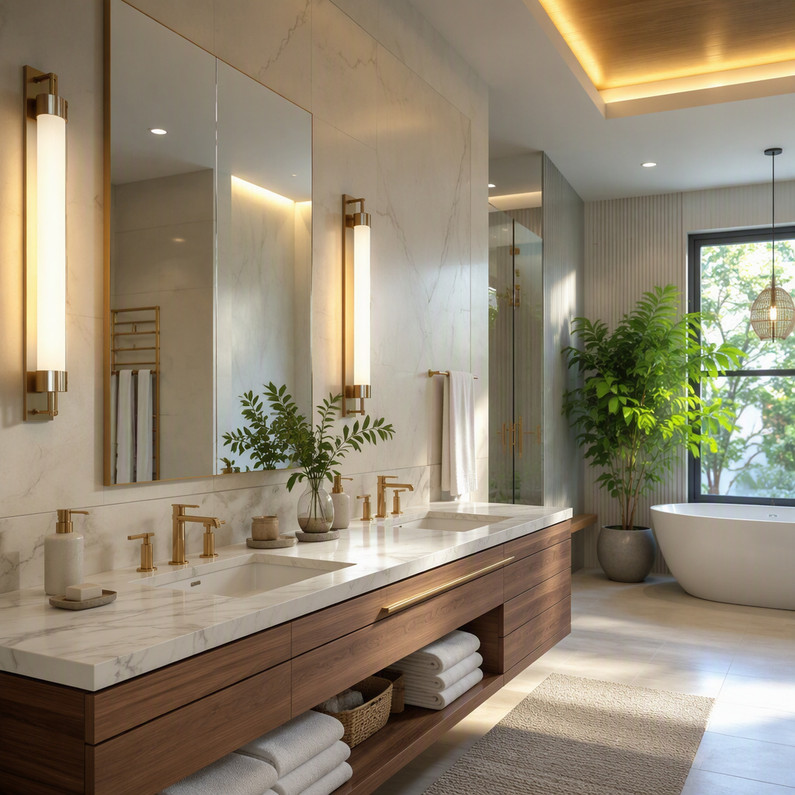
Quick answer: The best bathroom lighting setups for a brighter morning routine combine even, shadow-free light with warm-to-neutral color temperatures. Vertical sconces beside the mirror, layered ambient and task lighting, and daylight-mimicking bulbs (around 4000K) all help you see clearly, apply makeup or shave with precision, and wake up feeling more alert.
Bad bathroom lighting can throw off your entire morning. Harsh overhead fixtures cast shadows under your eyes, dim bulbs make it hard to shave or apply makeup, and the wrong color temperature can leave your skin looking washed out. The good news? Fixing it doesn't always require a full renovation.
This post breaks down six lighting setups that can transform your bathroom from gloomy to glowing. Whether you rent or own, you'll find options that fit different budgets, skill levels, and room sizes. By the end, you'll know exactly which setup suits your space—and how to make your mirror work in your favor rather than against it.
Why does bathroom lighting matter for your morning routine?
Lighting affects both function and mood. Task-heavy activities like shaving, applying makeup, and skincare need clear, even light to avoid mistakes. Meanwhile, exposure to bright, cool light in the morning helps signal to your body that it's time to wake up.
Color temperature plays a big role here. It's measured in Kelvin (K): lower numbers (2700K–3000K) give a warm, yellow glow, while higher numbers (4000K–5000K) produce a crisp, daylight-like white. For grooming tasks, a neutral range of around 3500K–4000K tends to be most flattering and accurate. Getting this right sets the foundation for every setup below.
1. Vertical sconces on either side of the mirror
If you do one thing to improve your bathroom lighting, make it this. Overhead lights cast shadows downward, creating dark patches under your eyes, nose, and chin. Sconces mounted vertically on both sides of the mirror light your face evenly from the front.
Position them at roughly eye level, about 60 to 66 inches from the floor, and space them 28 to 40 inches apart. This mirrors how theater dressing rooms are lit—flattering and shadow-free.
Best for: Anyone who applies makeup or shaves daily and wants professional-quality, even lighting.
2. A backlit or LED mirror
Backlit mirrors have a strip of LED light around the perimeter or behind the glass, producing a soft, diffused glow. Many models include built-in defoggers and adjustable brightness, which is handy after a hot shower.
Because the light comes from all sides, it reduces harsh shadows without needing separate wall fixtures. This makes it a great space-saving choice for smaller bathrooms or renters who can't install permanent sconces.
Best for: Small bathrooms, modern aesthetics, and people who want a plug-in or hardwired all-in-one solution.
3. Layered lighting with ambient and task sources
A single light source rarely does everything well. Layered lighting combines multiple types:
- Ambient lighting: Your main overhead fixture or recessed ceiling lights, providing general illumination.
- Task lighting: Sconces or mirror lights focused on the vanity for detailed grooming.
- Accent lighting: Optional strips under cabinets or along toe kicks for a softer, low-level glow.
Putting these on separate switches or dimmers lets you dial up bright task light in the morning and switch to a mellow glow for an evening bath.
Best for: Larger bathrooms and anyone who wants full control over brightness and mood.
4. Daylight-mimicking bulbs for early risers
If you wake up before sunrise, your body may need extra help feeling alert. Bulbs in the 4000K to 5000K range produce a cool, daylight-like light that can boost morning alertness and make colors appear true.
The simplest version of this setup is swapping your existing bulbs for higher-Kelvin LEDs—no rewiring required. Look for bulbs with a Color Rendering Index (CRI) of 90 or above, which show colors more accurately. This matters when matching foundation shades or checking whether your outfit colors actually work together.
Best for: Early risers, dark winter mornings, and anyone who struggles to wake up.
5. Dimmable smart lighting for adjustable brightness
Smart bulbs and switches let you change brightness and color temperature from your phone or with a voice command. Set them to gently brighten as your alarm goes off, mimicking a natural sunrise to ease you awake.
Many smart systems also let you save "scenes"—a bright, cool setting for weekday mornings and a warm, dim one for winding down at night. Some can even shift automatically throughout the day.
Best for: Tech-friendly homes and people whose lighting needs change between morning and evening.
6. Overhead recessed lighting with a warm center fixture
For a clean, minimalist look, recessed downlights spread even ambient light across the room without visible fixtures. On their own, they can create shadows on your face—so pair them with a central pendant or flush-mount fixture over the vanity to fill in the gaps.
Choose recessed lights with a wide beam angle to reduce harsh contrast, and keep the color temperature consistent across all fixtures to avoid a patchy look.
Best for: Newly renovated or larger bathrooms where a streamlined ceiling is a priority.
Which bathroom lighting setup should you choose?
Your ideal setup depends on your space, budget, and routine:
- Renting or on a budget? Swap in daylight-mimicking bulbs (setup 4) or add a plug-in backlit mirror (setup 2).
- Applying makeup or shaving daily? Prioritize vertical sconces (setup 1) for shadow-free light.
- Renovating? Combine layered lighting (setup 3) with recessed fixtures (setup 6) for maximum flexibility.
- Hard to wake up? Smart dimmable lighting (setup 5) with a sunrise routine can make mornings gentler.
Start with the single change that fixes your biggest frustration. Even swapping a bulb or repositioning a light can make your morning routine noticeably smoother—and your reflection a lot more accurate.
Frequently asked questions
What is the best color temperature for a bathroom mirror?
A neutral range of 3500K to 4000K is generally best for bathroom mirrors. It's bright enough for grooming tasks and renders skin tones accurately without the yellow cast of warmer bulbs or the clinical feel of very cool light.
Should bathroom lights be above or beside the mirror?
Beside the mirror is better. Lights mounted vertically on both sides illuminate your face evenly and eliminate the shadows that overhead lights cast under your eyes, nose, and chin. If side lighting isn't possible, a backlit mirror is a good alternative.
How many lumens do I need for a bathroom vanity?
A bathroom vanity typically needs around 1,600 to 4,000 lumens, depending on the size of the space and how bright you want it. For detailed tasks like makeup application, aim for the higher end of that range.
Can I improve my bathroom lighting without an electrician?
Yes. Swapping to higher-quality LED bulbs, adding a plug-in backlit mirror, or using smart bulbs in existing fixtures all improve lighting without rewiring. Hardwired sconces and recessed lighting, however, usually require a licensed electrician.
What is CRI and why does it matter for bathroom lighting?
CRI (Color Rendering Index) measures how accurately a light shows colors compared to natural daylight, on a scale up to 100. For bathrooms, look for bulbs rated 90 or above so makeup shades, skin tones, and outfit colors appear true.
Recent Posts
-

How to Choose the Right Barn Light Finish for Your Home
Quick answer: The right barn light finish depends on three things: your home's exterior color temper …25th Sep 2026 -
6 Bathroom Lighting Setups for a Brighter Morning Routine
Quick answer: The best bathroom lighting setups for a brighter morning routine combine even, shadow- …3rd Sep 2026 -
How Far Apart Should Outdoor Post Lights Be? A Complete Spacing Guide
The right spacing between outdoor post lights can completely change the look and feel of your proper …4th Aug 2026