
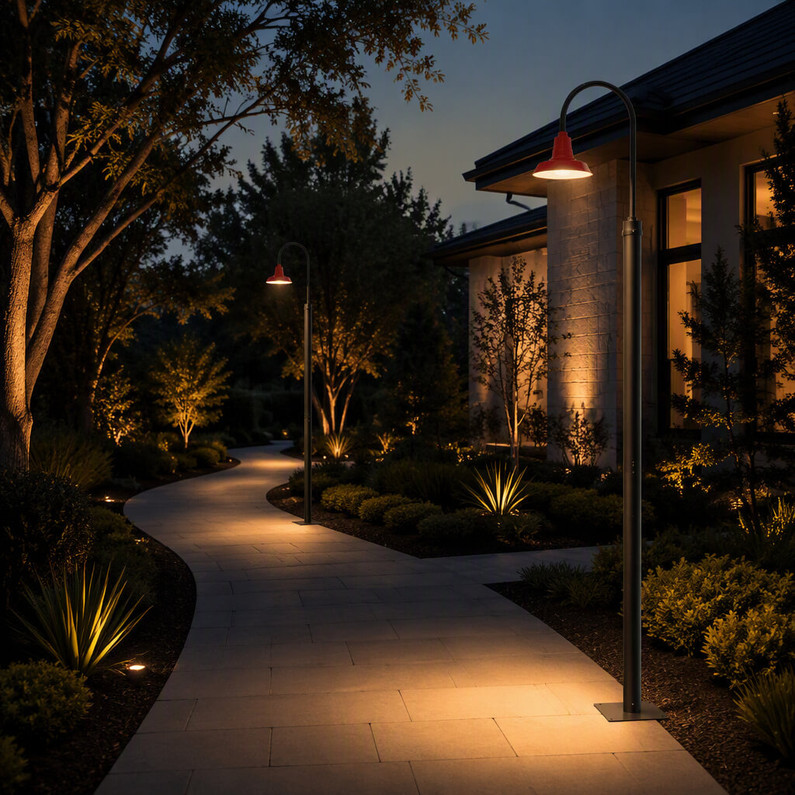
How Far Apart Should Outdoor Post Lights Be? A Complete Spacing Guide
The right spacing between outdoor post lights can completely change the look and feel of your property. Fixtures placed too far apart can leave dark areas along walkways and driveways, while lights installed too closely together may create glare, unnecessary expense, and an overly bright appearance.
Finding the right balance depends on several factors, including the height of your posts, the brightness of your fixtures, the size of the area, and the purpose of the lighting.
In this guide, we’ll explain how far apart outdoor post lights should typically be placed, what factors affect spacing, and how to plan your layout for pathways, driveways, gardens, and larger outdoor spaces.
General Outdoor Post Light Spacing Guidelines
There is no single spacing measurement that works for every property. However, these ranges provide a helpful starting point:
- Pathways and walkways: Approximately 8–10 feet apart
- Driveways: Approximately 30–50 feet apart
- Garden areas: Approximately 6–8 feet apart
- Patios and open outdoor spaces: Approximately 15–25 feet apart
- Property borders and fence lines: Approximately 20–40 feet apart
These measurements should be adjusted based on your fixture’s brightness, beam spread, mounting height, and the amount of light you want to create.
A taller post with a brighter fixture can generally cover more space, while shorter posts or softer decorative lights may require closer placement.
Factors That Affect Outdoor Post Light Spacing
1. Pole Height
The height of your post light affects how widely the light spreads across your property.
8-foot posts
- Ideal for pathways, gardens, and smaller outdoor areas
- Create a more intimate lighting effect
- Work well where fixtures are closer together
11-foot posts
- A versatile choice for driveways, entrances, and medium-sized spaces
- Provide broader illumination than shorter posts
14-foot posts
- Better suited for large driveways, commercial areas, and expansive properties
- Help illuminate wider areas with fewer fixtures
Choosing the correct post height allows you to create balanced lighting without adding unnecessary fixtures.
2. Lumen Output
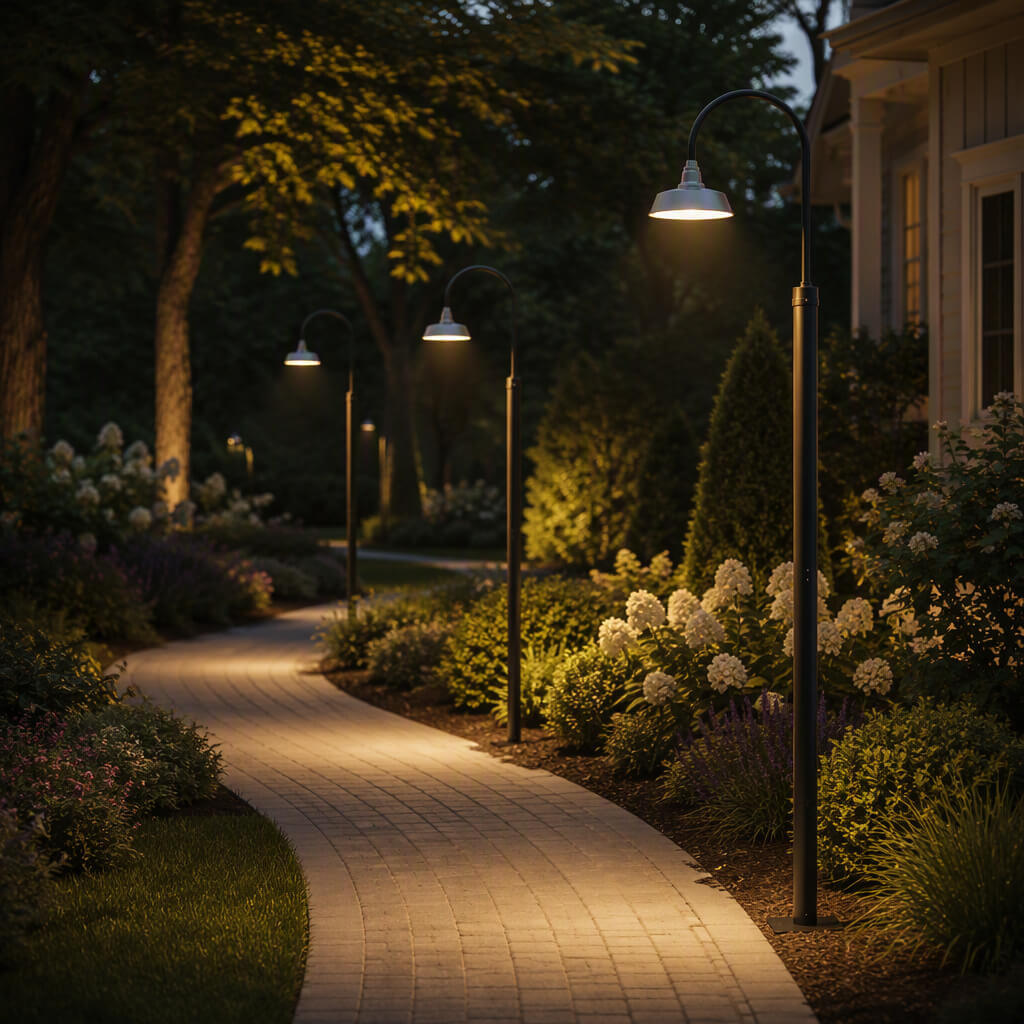
Lumens measure the amount of light produced by a fixture. Brighter lights can cover larger areas, while lower-output fixtures are better for decorative or accent lighting.
General guidelines:
- 300–500 lumens: Garden paths, decorative lighting, and accent areas
- 600–900 lumens: Walkways, patios, and general outdoor illumination
- 1,000+ lumens: Driveways, entrances, and security-focused lighting
The goal is not always maximum brightness. The best outdoor lighting creates comfortable visibility while maintaining the character of your landscape.
3. The Purpose of the Space
The ideal spacing depends on what you want the lighting to accomplish.
- Safety lighting requires more even coverage and fewer dark gaps.
- Landscape lighting focuses more on creating atmosphere and highlighting features.
- Security lighting should prioritize entrances, pathways, and areas where visibility matters most.
Before installing your lights, consider whether the goal is safety, decoration, or both.
Outdoor Post Light Spacing by Area
Pathways and Walkways
Walkways benefit from consistent illumination that helps people move safely at night.
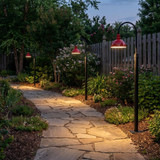
A common starting point is spacing lights about 8–10 feet apart, depending on fixture brightness and height.
Tips for pathway placement:
- Alternate lights on opposite sides of wider paths for a balanced appearance
- Allow light coverage from neighboring fixtures to overlap slightly
- Place fixtures near steps, turns, and changes in elevation
- Use softer lighting styles to create a welcoming atmosphere
Avoid placing lights too close together, as this can create harsh bright spots instead of comfortable illumination.
Driveways
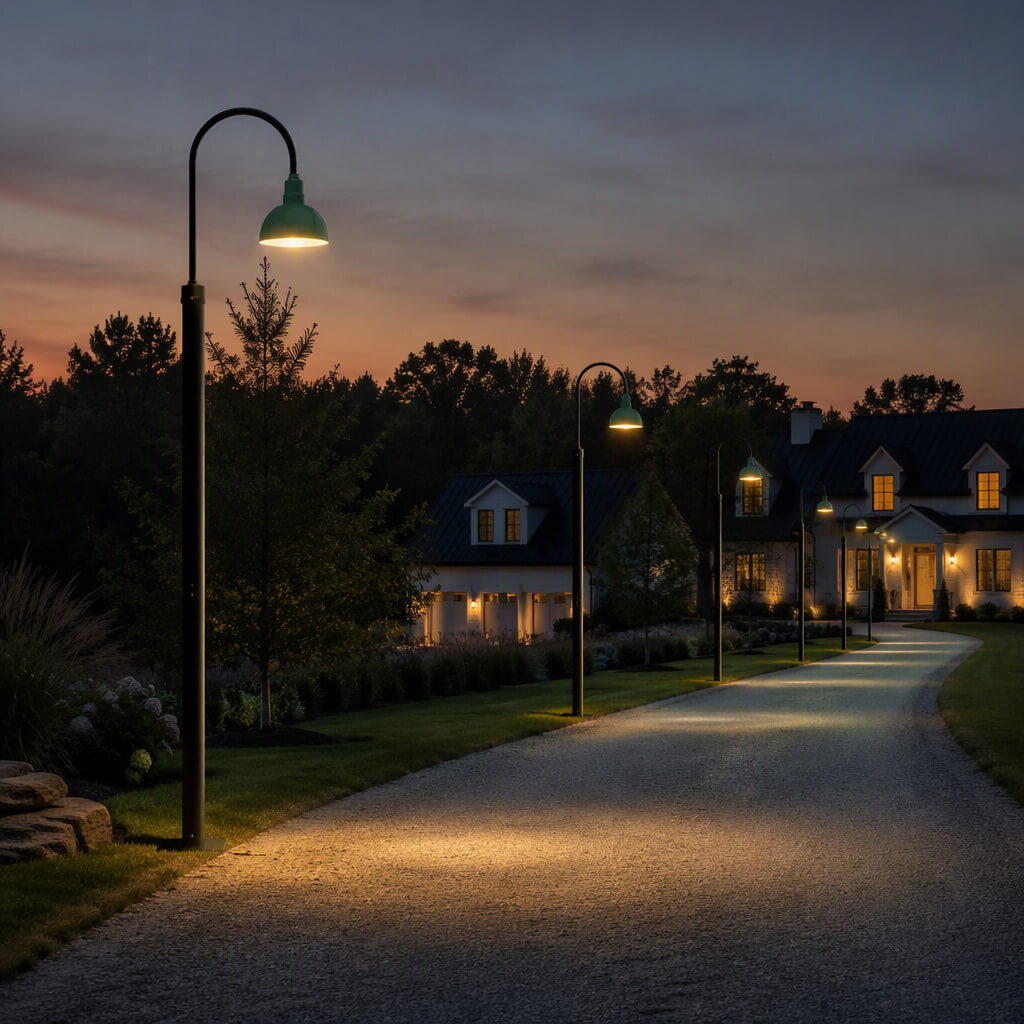
Driveways usually require wider spacing because they cover larger areas.
A spacing range of 30–50 feet between fixtures is often a good starting point, especially when using taller posts with stronger light output.
Consider adding lights:
- Near the driveway entrance
- Around curves or turns
- Near garages or parking areas
- Along long driveways where visibility is limited
For wider driveways, installing lights on both sides can create more balanced coverage.
Gardens and Landscaping
Garden lighting is often about creating depth and highlighting outdoor features.
A closer spacing range of 6–8 feet can work well for:
- Flower beds
- Pathways through gardens
- Decorative landscaping
- Trees and architectural features
Use lighting to highlight textures such as stone walls, plants, and garden structures rather than simply adding brightness.
Patios and Large Outdoor Areas
Large spaces such as patios, courtyards, and lawns usually require wider spacing.
A range of 15–25 feet apart can provide comfortable ambient lighting without making the area feel over-lit.
For entertaining spaces:
- Place lights around the perimeter first
- Add fixtures near seating areas and entrances
- Avoid creating bright spots directly where people gather
How to Calculate How Many Post Lights You Need
A simple way to estimate the number of fixtures is:
Total area length ÷ desired spacing distance = number of spaces
Example:
A 100-foot walkway with lights spaced 10 feet apart:
100 ÷ 10 = 10 spaces
You may need approximately 11 fixtures to cover the full area, including both ends of the walkway.
Remember to adjust your calculation based on:
- fixture brightness
- post height
- landscape layout
- areas needing extra visibility
Common Outdoor Post Light Spacing Mistakes
Installing Lights Too Far Apart
Signs include:
- Dark gaps between fixtures
- Poor visibility along paths
- Uncomfortable walking areas
- Important features hidden in shadows
Solution:
Reduce the spacing, increase fixture brightness, or choose taller posts.
Installing Lights Too Close Together
Signs include:
- Harsh bright areas
- Excessive glare
- Higher energy costs
- A commercial or parking-lot appearance
Solution:
Increase spacing or choose fixtures with better light distribution.
Ignoring Important Locations
Even if your spacing is correct, certain areas need additional attention.
Consider placing lights near:
- Front entrances
- Driveway entrances
- Pathway turns
- Stairs
- Outdoor gathering spaces
Should Post Lights Be Installed on One Side or Both Sides?
The answer depends on the size and purpose of the area.
One side works well for:
- Narrow garden paths
- Decorative walkways
- Small yards
Both sides work better for:
- Wide driveways
- Large entrances
- High-traffic walkways
Alternating placement can also create a more natural and visually appealing design.
Choosing the Right Outdoor Post Lights
Proper spacing works best when paired with the right fixture. Outdoor post lights should match your property size, design style, and lighting goals.
Cocoweb’s LED post lights combine energy-efficient illumination with classic and contemporary designs, making it easier to create balanced lighting for pathways, driveways, gardens, and outdoor living spaces.
Choosing the right combination of post height, brightness, and placement will help you achieve a welcoming outdoor environment without unnecessary fixtures or wasted energy.
Final Thoughts
The ideal distance between outdoor post lights depends on three key factors: pole height, lumen output, and the purpose of the space.
As a starting point:
- Pathways: about 8–10 feet apart
- Driveways: about 30–50 feet apart
- Gardens: about 6–8 feet apart
- Large outdoor spaces: about 15–25 feet apart
Before final installation, test your layout at night and adjust as needed. The best outdoor lighting design creates a balance of safety, beauty, and comfort while enhancing the character of your home. With Cocoweb’s collection of LED post lights, homeowners can choose from a variety of styles, finishes, and post heights designed to provide energy-efficient illumination for pathways, driveways, gardens, and outdoor living spaces. The right Cocoweb post light setup can help transform your exterior into a welcoming, beautifully illuminated environment.
Recent Posts
-

6 Bathroom Lighting Setups for a Brighter Morning Routine
Quick answer: The best bathroom lighting setups for a brighter morning routine combine even, shadow- …3rd Sep 2026 -
How Far Apart Should Outdoor Post Lights Be? A Complete Spacing Guide
The right spacing between outdoor post lights can completely change the look and feel of your proper …4th Aug 2026 -
Post Lights for Every Home Style: From Farmhouse to Modern
Matching post lights to your home's architectural style comes down to four factors: fixture silhoue …10th Jul 2026